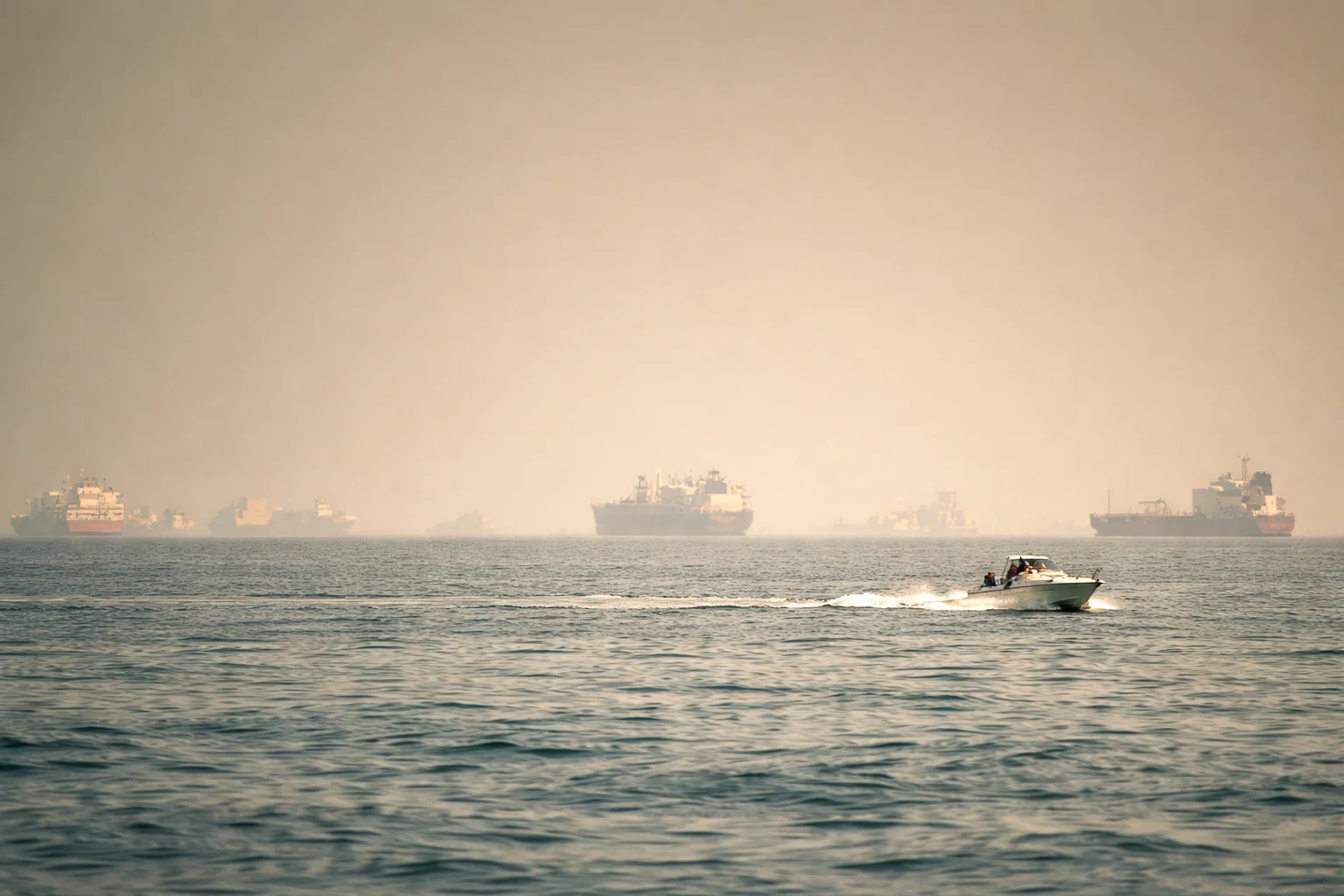
Global energy markets are reeling as crude oil and liquefied natural gas (LNG) shipments through the Strait of Hormuz — one of the world’s most crucial maritime oil routes — have been severely disrupted after recent military strikes on Iran by the United States and Israel and Tehran’s retaliatory actions.
The disruption marks a dramatic escalation in the long-running Middle East crisis, with major oil companies, trading houses, and shipping firms halting operations in the Persian Gulf amid safety fears and conflicting military warnings.
Why the Strait of Hormuz Matters
The Strait of Hormuz — a narrow waterway between Iran and Oman — is one of the global energy system’s most important chokepoints. Roughly 20 million barrels of crude oil per day and large volumes of LNG traditionally transit this route, accounting for about 20% of global oil exports.
Because so much of the world’s petroleum supplies flow through this narrow passage, any disruption can ripple out to international markets, affecting oil prices, fuel costs, and economic stability far beyond the Middle East.
Shipping Suspended, Vessels Backed Up
In the wake of the conflict:
- Oil majors and traders have suspended shipments of crude oil, refined fuels, and LNG via the Strait of Hormuz. Several tanker operators have said their vessels “will stay put for several days” to avoid transiting the area.
- Satellite tracking and port data show tankers idling near major hubs like Fujairah in the United Arab Emirates, unable or unwilling to move through the strait.
- Japanese shipping companies — including industry leaders like Nippon Yusen KK and Mitsui O.S.K. Lines — have publicly halted their transits through the region, prioritizing the safety of crews and cargo over delivery schedules.
These moves reflect growing concern that active military operations and conflicting navigation warnings could put vessels and personnel at risk.
Navigation Confusion and Risk Warnings
The situation on the water is chaotic: Iran’s Revolutionary Guard Corps reportedly broadcast warnings that no vessels should pass through Hormuz, while international naval forces have stressed that such declarations are not legally binding.
The U.S. Navy has also issued safety alerts, stating it cannot guarantee safe navigation for commercial ships in the region, prompting shipping ministries in countries like Greece to advise vessels to avoid the Persian Gulf altogether.
What This Means for Global Oil Markets
Although shipping has not completely stopped, analysts say the backups and route suspensions are already squeezing supply chains:
- With vessel traffic slowing or reversing course, international energy markets are bracing for reduced physical crude flows and potential price spikes if the disruption persists.
- Rerouting around Africa’s Cape of Good Hope would add days — and significant costs — to shipments, intensifying pressure on already fragile supply lines.
- Insurance premiums for ships operating in the region are expected to surge as risk assessments adjust to the heightened hostilities.
Broader Economic and Political Impact
Energy traders and governments worldwide are watching closely. A prolonged slowdown through Hormuz could not only elevate prices at the pump for consumers but also complicate diplomatic efforts to de-escalate the conflict. Countries that rely heavily on Gulf oil — such as China, Japan, South Korea, and India — are particularly exposed to supply disruption risks.
The current disruption highlights how fragile the global energy infrastructure has become amid geopolitical tension, and underscores the strategic importance of alternative routes and contingency planning in an increasingly uncertain world.
